Scotty Franzyshen
Housing, employment, community, and life in Butte County
About Me: sfranzyshen.org
Facebook: sfranzyshen
Email : info@sfranzyshen.org
Phone : +1 530 924 4306
Looking back on an earlier chapter of my life in San Francisco. The photograph and original memories came from a recent Facebook post, with more reflections added here.
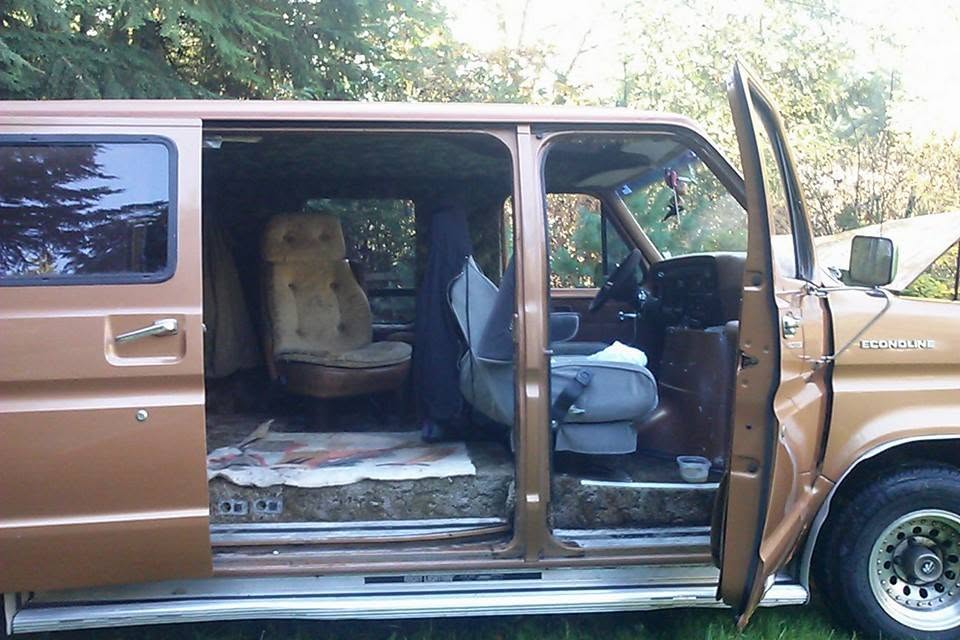
This was my home for a little while … 😁
A home on wheels
I lived in this van for the first half of a full rebuild of Letucia, a Burning Man art car we were working on over on Treasure Island.
I was living in San Francisco, around Golden Gate and Webster, during that period. Later, I spent time at the North Beach Hotel, going back and forth between staying there and living in the van while the rebuild continued.
It wasn’t a conventional way of living … but I loved that time in my life.
The city and the people
I loved North Beach. I loved being able to spend time in that part of San Francisco … but really, I loved all of the city.
The work on Letucia was part of the adventure, but so were the experiences, the people, and the friendships that came out of those days.
There are stories from that period that could fill volumes of a book someday. And some of the friendships I made will last a lifetime.
I wouldn’t trade that chapter of my life for any amount of money.
If I could find a way to live an alternative life in San Francisco again, I would.
Homeless … or homefree?
Yes, I was technically homeless during part of that time.
But back then, I preferred to call it “homefree.” 🙂
I had a home … it just happened to have wheels.
That word captured how I felt about the life I was living then. It was an adventure I remember with affection, and one I chose to embrace.
My later experiences navigating homelessness in Chico have been very different. Both are part of my story, and I don’t want to pretend that every experience of living without conventional housing feels the same.
The night I got rousted on Treasure Island
Of course, not every part of being homefree was peaceful.
There was one night during the Letucia rebuild when I decided to sleep in the van on Treasure Island. I’d put up black curtains so nobody could see inside.
Then the cops showed up.
One officer got very aggressive trying to open the van door. He pulled so hard that he broke the door handle … but the door still wouldn’t open.
Those old van doors had a double latch. If you didn’t close the door all the way, the first latch would catch and hold it locked, but the door could still move in and out a little. Push hard enough and it would catch the second latch and close firmly.
Well … this cop kept banging and pulling on the door, trying to get it open. But that first latch held.
At one point, the other officer suggested maybe nobody was inside.
The first cop was getting angrier and insisted he knew somebody was in there because he could see my shoes on the floor.
And he kept going at the door.
Eventually they stopped and went back to sit in their patrol car. They’d threatened to have the van towed.
At that point, considering how angry that one officer seemed, I was thinking … Great! 😳
But the tow truck never came.
After nearly an hour, the officers finally drove away. In the very early hours of the morning, I moved the van off Treasure Island.
I never tried to sleep on the island again.
I remember thinking that if that officer had managed to get his hands on me, he might have beaten me up. I don’t know what would actually have happened … but that’s how threatened I felt in that moment.
Funny thing is … for all the adventures I had in San Francisco, the only people I ever felt threatened by there were the cops. LOL.
And that’s another part of the story behind that old photograph. What looked like a comfortable little home on wheels could still leave me vulnerable to someone deciding I didn’t belong where I’d parked it.
Every person has a story
And that’s really what I want people to understand when they look at this picture.
Every person experiencing homelessness has a story about how they got there. You can’t know that story simply by looking at where they sleep, what they own, or how they live.
People are quick to assume drugs or mental illness must be involved. Sometimes those are part of someone’s circumstances. Sometimes they’re not.
Sometimes it’s poverty, the loss of a home, a relationship, or a string of events that didn’t go the way somebody hoped.
And sometimes … it’s self-exploration. A desire to travel, meet people, discover something about yourself, and experience a different way of living.
I became a father very young. Before I’d even finished high school, I had to become a provider and work my ass off. I took that responsibility seriously, but it meant growing up pretty fast.
I’d already had some adventures early in life, and those experiences exposed me to people, cultures, and worlds very different from the one I’d grown up in.
Travel has always been in my blood.
Somebody once told me my last name roughly translates to “French traveler.” Who knows how true that is … I certainly haven’t verified it. But I’ve always liked the thought. 😁
I’ve spent much of my life wanting to see what’s around the next corner … and sometimes the road itself has felt more like home than a fixed address.
Before you decide someone needs fixing …
I think one of the biggest mistakes we make is assuming that everyone living outside conventional housing has the same problem … and therefore needs the same solution.
Not everyone who is unhoused needs to be rescued from the life they’re living.
Some people desperately want housing and can’t get it. Some need medical care, treatment, protection, or support. Some need only a little assistance to get through a rough patch. And some are exploring a way of living that doesn’t fit neatly into everybody else’s expectations.
That doesn’t mean we ignore people or leave them without options.
It means we listen before we intervene.
Offer help. Make housing available and affordable. Keep people safe. But don’t assume someone needs to be controlled, corrected, or forced into a program just because their life looks different from yours.
Rules and restrictions can be reasonable and moderate, designed around actual safety needs rather than making every person conform to one rigid version of how they should live.
The lower the unnecessary barriers, the more room people have to make decisions about their own lives.
More than an old van
When I look at this photograph, I don’t just see an old van.
I see a chapter of my life that I loved … a city I still love … and friendships that no amount of money could replace.
And I remember that from the outside, somebody might have looked at me and seen only another homeless man.
They would have missed almost the entire story.
Before we decide what’s wrong with someone … maybe we should ask them about their journey.